|
1.2.4.2 Universal AttributesWe don't know whether the Whole Universe is fundamentally one or many, permanent or impermanent, unchanging or ever changing, discrete or continuous. For example: People such as the ancient Greeks Parmenides and Zeno proposed that motion is impossible. Zeno devised a number of paradoxes that demonstrated that idea of motion is incoherent.
In a race, the speedy Achilles can never catch up to a slow tortoise that has a head start. At any point in time, Achilles is a certain distance behind the tortoise; while Achilles covers that distance, the tortoise moves on a bit, perhaps ever so slightly, so Achilles may get close to the tortoise but never actually reach it. A similar argument can be used to supposedly show that a speeding arrow (or a bullet) will never hit its target if the target is running away. We know it's false, but it’s hard to find a flaw in the argument. Diagram from Martin Grandjean - Own work, CC BY-SA 4.0, https://commons.wikimedia.org/w/index.php?curid=39999636 Ancient Greeks debated whether you could take a heap of some substance and keep splitting it in half. Can we (conceptually at least) keep dividing it into smaller and smaller lots without affecting its essence: is matter continuous? Or does there come a point when it can't be split without changing its essential nature: does reality come in discrete chunks? · The ancient Greeks Leucippus, Democritus and Epicurus proposed the latter, and developed the atomic theory of matter, largely to show that Parmenides and Zeno were wrong. · The Nyāya-vaiśeṣika system of Indian philosophy also postulated, hundreds of years BCE, that indivisible particles were the ultimate component of matter.  · But none of these ancients had direct evidence that they were right, though they were, in a way. If we keep splitting a jug of water in half, eventually we will come to a single water molecule, H2O. If we split that it is no longer water, but hydrogen and oxygen (or perhaps more fundamental particles). But other ancient Greeks argued that the universe is continuous.  It’s really only by luck that those atomists named above were correct, it's not because of the value of their arguments. Modern scientists are still debating whether space itself (rather than matter) is continuous or comes in discrete chunks. Modern scientists accept that they don't know what really exists behind the entities described by quantum theory or string theory. Nevertheless, scientists understand the universe to consist of fundamental particles, such as electrons and quarks and fundamental forces, such as gravity and electromagnetism, and the forces are carried by particles such as gravitons and photons. So some scientists might hypothesise that the universe is not one, but many, full of change and impermanence, and perhaps discrete, but these ideas may be revised as more evidence come to light. Scientists admit that they will never be sure if they have a complete understanding of the ultimate nature of the universe, and they certainly don't right now. The traditional religions and philosophies have conflicting notions and we have no grounds to believe one or the other is true. 1.2.4.2 We don't know whether the ultimate nature of reality is one or many, static or dynamic, continuous or discrete, but at present it is unknowable and perhaps ultimately inexpressible or incomprehensible. more (later)
Members can tell us (publicly) what they think of this page. How can we improve it? Enter your comments.
* * * * * * *
|
|


 English (English)
 Español (Spanish)
 Français (French)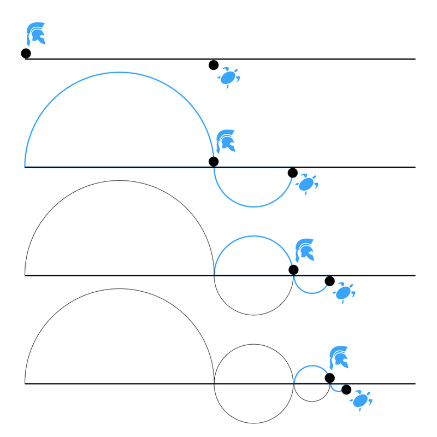


We acknowledge the traditional owners and custodians of Country, throughout all colonised lands, and their connections to land, waters and community. We pay respect by giving voice to truth, values and social justice, acknowledging our shared history, and valuing the cultures of first nations peoples.
Copyright © 2008 - 2026 Trevor J Rogers, care of the address shown on this page. All rights reserved. Apart from any fair dealing for the purpose of private study, research, criticism or review, as permitted under the Copyright Act, no part may be reproduced by any process without written permission from the copyright owner. Any approved reproduction is permitted only with full attribution of the source, referring to this site and this copyright notice. The moral right of the author is asserted.
Top